SCBWI meeting Monday September 16, 2013 Hughenden Hotel, Woolahra

Special Guest: Author, Aleesah Darlison

_MG_1583_-_Copy.12252603_std.jpg

Aleesah writes picture books and novels for children. She reviews books for the Sun Herald and has won many awards for her writing. She has written 18 books in the last three years, including Bearly There, Puggle’s Problem, Warambi, the Unicorn Riders and Totally Twins Series. In 2014, Aleesah will release her fourth picture book, Little Meerkat, (published by Wombat Books) plus a brand new fantasy series for boys called Ash Rover (published by Walker Books).  She travels extensively across Australia and internationally entertaining and inspiring students of all ages.

Warambi_HB_Cover_AW6_FRONT_2-1.5812023_std.jpg

For more about Aleesah go to: http://aleesahdarlison.com

The Business of Writing

Aleesah spoke about the business of writing. Of needing to see your writing as a business where you are in charge of everything from the finances, creating the product, pitching that product and working with designers, publishers, publicists to promote that product. You are also in charge of your image and brand and making sure it is consistent and representative of you and what you write.

The most joyous part of the business, however, is the creating, but so much more has to be done to keep that business going.  

Marketing is Hard Work

She admitted that marketing is hard work, takes skill and needs lots of time. Even if you have a great publicist, you need to look for other opportunities to get your work known and in front of your readers. As with any business, not everyone will love your ideas and rejection will come with the pitches of the product as well as in trying to market it. Don’t worry. Aleesah keeps a spreadsheet of all her rejections and has to date about four hundred of them…but she still keeps going.

Here are a few things to keep your name out there: appearances, networking, writing articles, book reviews and book launches.

Opportunities and New Angles

Quinns_Riddles.272233921_std.JPG

Aleesah emphasized to always look for new angles and opportunities to promote your work and yourself….like ideas, they are everywhere and you can always do more. Publishers also LOVE authors and illustrators who are savvy self-promoters.

You Are The Key To Your Own Success

She was adamant that everyone has excuses or feels it is hard but you have to take the risk and put yourself out there.

One lovely piece of advice Aleesah gave was to look at your career as a long-term project. Those over-night successes rarely happen over night.

With the market more competitive than ever, you need to work out what is it that makes you stand out. What is your WOW factor that makes you and your product different from other authors and illustrators.

As well as the usual ways to promote like Facebook, LinkedIn, Twitter and blogs, think of ways to connect emotionally with your reader…and those who buy books for them.

Totally_Twins_cover1.272231807_std.jpg

Regularly think about:

Who you are

Who you want to be

Who you want to be seen as

And if necessary;

Rebrand

Relaunch

reinvigorate and tell everyone about it.

Thank you to Aleesah for a wonderfully succinct and information-packed evening. The room was completely buzzing afterwards. Thank you as always to Susanne who generously opens her hotel, The Hughenden, for us to chat and talk and share our bookish news.

Take care everyone,

Deborah Abela ARA, SCBWI  
LA SCBWI Conference Part 3

And so the listening goes on....

Editor Panel: ‘What Makes an Evergreen, What Makes a Hit’ - with ANDREA PINKNEY, DONNA BRAY, CLAUDIA GABEL, NAMRATA TRIPATHI, ALLYN JOHNSTON, MELISSA MANLOVE

They said lots! So I’ve squished some main points here.

They are looking…always…for new books:

With new voices,

That are beyond category,

That are brave and have heart

that speak to a universal, emotional truth

maybe it speaks to a moment in time eg Wonder by R J Palacio

that they will fall in love with and will be in love with after working on it

that are a marriage of a great voice and topic that is well written

that, if they are a picture book, have great rhythm – read it aloud to check

AND….All of them are looking for a long relationship with the author.

allyn-johnston.jpg

Keynote: Matt de La Pena

Writing (and Reading) on the Wrong Side of the Tracks

62172_de_la_pena_matt.jpg

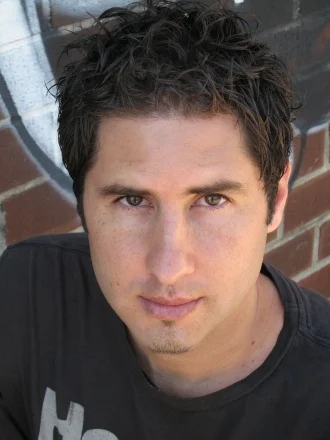
Matt de la Peña is the author of four critically-acclaimed YA novelsBall Don't Lie, Mexican WhiteBoy, We Were Here and I Will Save You —and the award-winning picture book A Nation’s Hope: The story of Boxing Legend Joe Louis. This year his fifth YA novel, The Living, will be released as will his fist middle grade novel, Curse of the Ancients. 
His advice ran something like this: Focus on what you want to write not on what you want the editors to read or hear. Make sure you know what is your point of view (POV). He grew up on the border of Mexico and San Diego with tight-knit families but not a lot of money or education. Sport was a haven for him until a teacher told him he could go to college and meet girls. Multi-cultural literature changed his life, starting with The Colour Purple.

‘Writing is all about how hard you’re working when no one is watching.’  


ANDREA PINKNEY - From Idea to Acquisition: Turning Your Brainstorming into Books.

Andrea is the best selling author of over 30 books and is the executive editor of Scholastic NY.

Advice for writing:

Write every day

Kill the committee  - or at least wave them goodbye

Writing is rewriting

Read everyday and widely

Depart from your comfort zone

She sees her job as an editor as being someone who holds the flashlight and tells the author where to dig.

CLAUDIA GABEL - First Pages, in Reverse: Successful Beginnings (& the Revisions That Got Them There!)

She suggests starting your novel on the day your character’s life changes.

At the beginning they know what they want but as they book develops they discover what they need. You’re always travelling from WANTS to NEEDS.

HENRY WINKLER/LIN OLIVER -

Comedy Comes From the Heart

Yes! The Fonz! A little older, without the leather jacket and very funny who has written books with co-founder of SCBWI, Lin Oliver. This was a highlight that my younger teenager self revelled in. Lin and Henry spoke about how comedy and pathos are closely linked. That from tragedy comes great and that comedy often skims the fine line between the two. They have written two series together – Hank Zipzer, which is inspired by the fact that Henry Winkler didn’t find out he had a learning challenge until he was 31 and so spent his childhood feeling stupid. Their next series together is Ghost Buddy.   

A few final observations....

  1. Digital is exciting! Don’t be afraid of it. It is a new way of delivering stories. In 2013 digital overtook backlist sales. Previously publishers were gatekeepers but now there is a true democracy. Authors can have a global audience with instant reactions and huge fan bases, but editors provide the scaffolding to make sure the book will stand.
  2. Even best selling authors get terrified about that first blank page of a new novel.
  3. Write from your heart, write about what matters to you and create the new trends.
  4. Make sure you know what the emotional core of your story is…courage? Self-acceptance? Loss?
  5. Write the first draft for you and in the second draft, work out what it needs.
  6. Write a strong book with a strong hook.
  7. There are more submissions and the competition is stronger so you need to push yourself further.
  8. Enjoy your writing. 

I would heartily recommend attending a conference if you can. For the fun and gorgeous members, the publishing giants and professionals in the same room, the parties, the books, and the time to indulge in this lovely thing we do.  

DSC00940.JPG
Lin Oliver, Co founder SCBWI.JPG
workshops.JPG

More from the SCWBI LA Conference 2013

Notes From a Withering Fan

I'm hoping by now you have had a chance to look at the SCBWI 2013 Conference blog and here I'd like to go into more detail of key concepts and ideas I took away from the conference.   

Laurie Halse Anderson had the daunting job of giving the first keynote to 1200 eager SCWBI members. Laurie is a NY Times best-selling author of all kinds of kids books. Her keynote spoke about feeling like a fraud and having a 'cloud of catastrophe' hanging over our heads when we write and advised us to try and blow it away. 'Writing is hard and scary and we need to acknowledge our doubts and fears and then just get on with it.' Nice. Your duty as a writer is to 'defend, protect and celebrate childhood.'

Here are her tips for writing:       

  • Drop every fear and doubt,
  • Promise yourself you wont quit,
  • reconnect with yourself as a kid,
  • play, experiment write or draw for fun. 
  • Turn off the internet! 


Unknown.jpeg

The Importance of Being Subversive in Writing for Kids: Not Every Book Should Put You To Sleep


Jon Scieszka is a big, hulking subversive and is very happy about it. And so are the kids who read his books. He has a wesbite, Guys Read, with tips on how to get boys to read and is hysterical. His earlier books met with many letters along the lines of 'please do not send us anything ever again.' But he persisted. His advice to all of us was:

1. Find kids to practice on

2. sit down and create

3. Enjoy Yourself

4. Just do it

knucklecover.jpg

Jon is also the author of Knucklehead, an affectionate look at his childhood where his dad called all five sons knucklehead, maybe because he couldn’t remember their names. One of his most prized memories was when he signed a copy of the book for George W Bush with the message, ‘to my favourite knucklehead.’

Andrea Davis Pinkney

New York Times best-selling and award-winning author of more than thirty books for children and young adults and vice president, executive editor at Scholastic, NY. She wanted to make sure all writers in her sessions including all of the following in the Writing recipe:

  1. Voice
  2. research
  3. authenticity
  4. experience
  5. emotion
  6. physicality
  7. psychic condition
  8. time, place
  9. intention
  10. elements/texture
  11. imagination

Steve Sheinkin is a former history textbook writer and now writes nonfiction books that kids and teens will actually want to read. They are brilliantly entertaining, page turning books that draw kids from the present into a fascinating past.

Deborah Halverson gave a breakout session called, 

'Setting Wherefore Art Thou? The Surprising Benefits and How to’s of Setting in YA/MG Novels.’

Deborah is a freelance editor, author, writing instructor, and the founder of DearEditor.com

Deborah believes that setting offers the author a chance to manipulate the character’s thoughts and actions. To take them out of their comfort zone. Use the setting to affect a character not just illustrate a place.

All good settings should:

a) Enhance the plot

b) Help us know character better by how she/he reacts to that setting.

There are 4 elements of setting:

  • PLACE Details are so important 
  • TIME of year, day, month?
  • SOCIAL CONTEXT
  • SETTING PROPS

We can manipulate all these things to make the character feel awkward and crank up the tension. To force issues and make them uncomfortable. Have your characters react to the setting, use props to enhance action, emotion and to create a sense of place that the reader will fall into. 

‘Taking the middle out of MG fiction. A Writer's Manifesto.’

Peter Larangis has sold over five million copies and been translated into thirty languages. Titles include the New York Times best-selling The Colossus Rises, in The Seven Wonders series; The Sword Thief, The Viper’s Nest. 

He grew up as the oldest in a family with lots of siblings and cousins, which meant he had to entertain them and the best way he could do that was by telling them stories. He believes MG has changed and readers want more challenging reads. Here are a few of his tips:

  • Always start with character. They should drive the plot and have a piece of you in them.
  • Write a killer first page. It helps you find your voice and your way into the book
  • Keep descriptions brief and to the point.
  • MG readers often want a hint or romance but not too much.
  • Provide smaller solvable problems along the way.
  • Treasure the goofy
  • Have a great story and a stellar pitch
  • Listen to everyone’s advice then ignore it. You will recognise the nuggets amongst the rocks

More LA Conference wrap up to come soon! 

Enjoy! Deborah Abela  

Author photo color 2006.jpg